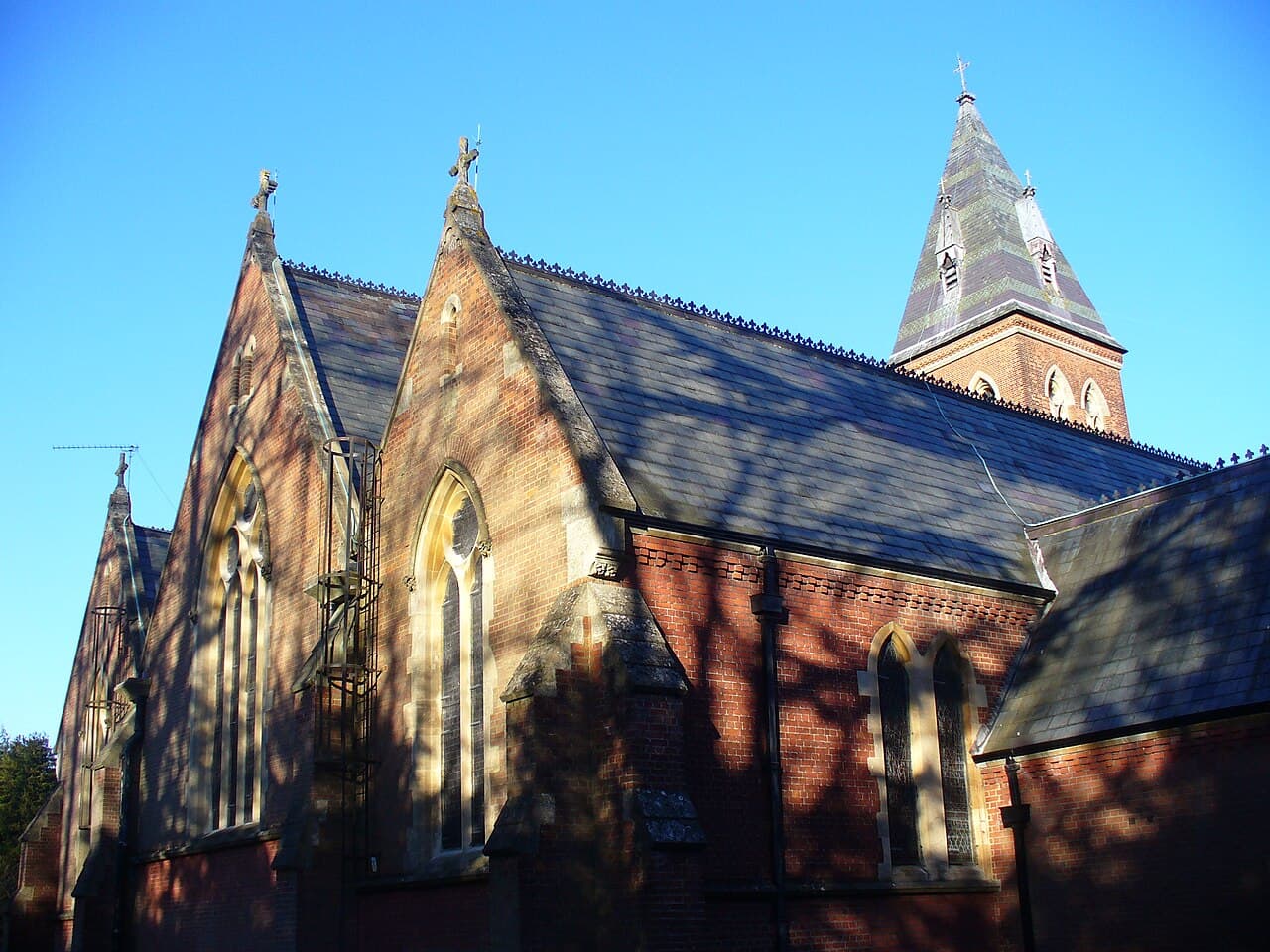
A Short History of Aldershot: Village to Home of the Army
Aldershot went from a heathland village to a garrison town in a single decade, and its story has kept changing ever since.
Aldershot was a village of 875 people in 1851. In 1854 the War Department bought nearby heathland for a permanent Army training camp, and by 1861 the population was over 16,000. Since then it has been known as the Home of the British Army, with a large Nepalese community and major regeneration at Union Yard and Wellesley.
This is a short history, not a complete one. For a deeper dive, the Aldershot Military Museum is the place to go.
Before the Army: a village of 875
Before 1854 Aldershot was a small village on open heathland. Wikipedia records 875 residents in 1851.
1854: the camp that made the town
In 1854 the British War Department bought heathland near the village and set up Aldershot Garrison as the first permanent training camp for the British Army. Until then, troops had mostly trained in temporary camps. Queen Victoria and Prince Albert took a personal interest, and the Prince Consort's Library was established there in 1860.
The effect on the village was dramatic. The same source puts the population at over 16,000 by 1861, around eighteen times the 1851 figure. Shops, pubs, churches, schools and rows of terraced housing followed the soldiers. The town's identity became bound up with the Army, which is why it is still called the Home of the British Army.
Victorian growth and landmarks
The museum's own history notes that the main military gallery covers the Army's presence from the 1850s, and the museum sits in two surviving Victorian barrack buildings from the 1890s. Several landmarks of the period remain:
- The Wellington Statue was placed on Round Hill in 1885 after a journey from Hyde Park Corner. See our guide.
- The Aldershot Observatory on Queens Avenue, a gift from Patrick Young Alexander, opened on 22 December 1906 (Wikipedia).
- Aldershot Lido opened in 1930 (Wikipedia).
The twentieth century
Aldershot's training role made it central to both World Wars. Wikipedia says around 330,000 Canadian troops trained in and around the town during the Second World War. Pioneer aviators worked nearby: Samuel Cody, who was Chief Instructor of Kiting at the Balloon School in Aldershot from 1906, made what is recorded as the first official piloted flight of a heavier-than-air machine in Great Britain at Farnborough on 16 October 1908.
In 1948 Aldershot hosted two parts of the Olympic modern pentathlon: fencing at the Central Gymnasium and swimming at the Lido. On 9 December 1961 The Beatles played the Palais Ballroom to a crowd of about 18.
On 1 April 1974 the Municipal Borough of Aldershot merged with Farnborough Urban District to form the Borough of Rushmoor, named after the heath.
The Gurkha and Nepalese community
Gurkhas have served in the British Army for more than two centuries. In May 2009, after a high-profile campaign fronted by Joanna Lumley, the government changed the rules so that veteran Gurkhas who retired before 1997 and had served at least four years could settle in the UK (VOA report). Many families chose Aldershot and Farnborough. The 2021 Census recorded 10,575 people of Nepali ethnicity in Rushmoor, about one in ten residents, and the Dalai Lama opened the Buddhist Community Centre UK on 29 June 2015. A bronze statue of Kulbir Thapa Magar VC was unveiled in Princes Gardens in 2021.
Regeneration today
Two big projects are changing the town.
Union Yard is a town-centre scheme delivered by the Rushmoor Development Partnership (Rushmoor Borough Council and The Hill Group). According to Rushmoor and JTP, the architects, it provides student accommodation for 128 students, around 100 new homes, 12 commercial and retail units and a Makers' Yard of creative workspaces around a new public square linking the High Street and Union Street.
Wellesley is the urban extension on the former Garrison land. Grainger's 2013 announcement gave planning consent for up to 3,850 homes on a 255-hectare site, including new schools, green space and the refurbishment of listed buildings such as the Cambridge Military Hospital. Delivery was planned over about 20 years.
Why it matters
Aldershot's story is one of rapid reinvention: a village, a military boom town, and now a modern, diverse borough. Many of the places above are free to see, and a few hours with the museum, the Wellington Statue and Princes Gardens is a good introduction.
Checked 5 October 2026. Details change, so follow the official links above before you travel.
Frequently asked questions
- When was Aldershot Garrison founded?
- In 1854, when the British War Department bought heathland near the village of Aldershot to build a permanent training camp (Wikipedia, Aldershot Garrison).
- How big was Aldershot before the Army arrived?
- Wikipedia records 875 residents in 1851, rising to over 16,000 by 1861.
- When did Rushmoor borough start?
- On 1 April 1974, joining the Municipal Borough of Aldershot with Farnborough Urban District.
- What is Union Yard?
- A town-centre regeneration scheme by Rushmoor Borough Council and The Hill Group with student accommodation, new homes, commercial units and a Makers' Yard, per Rushmoor and JTP.
- How many homes is Wellesley planned to have?
- Planning consent in 2013 was for up to 3,850 homes over about 20 years on the former Garrison land (Grainger plc).
Share this article