Aldershot's Nepalese Community: People, Places and Food
About one in ten Rushmoor residents is Nepali, and the community has shaped the town's streets, temples, calendar and menus.
The 2021 Census recorded 10,575 people of Nepali ethnicity in Rushmoor, about 10.6% of the borough's 99,756 residents. The link goes back to Gurkha service in the British Army, and the right of veteran Gurkhas to settle in the UK was extended in 2009. The community has since built temples, organisations, festivals and a Nepalese food scene in Aldershot.
Aldershot's Nepalese community is part of the town's modern story. This guide sticks to what we can source, and where we cannot confirm something we say so.
The numbers: Census 2021
In the 2021 Census of England and Wales, the Office for National Statistics (via Nomis, table TS022, ethnic group detailed) recorded:
- 10,575 residents of Nepali ethnicity (including Gurkha) in Rushmoor. That is 8,991 who identified in the Asian group plus 1,584 who identified under "Other ethnic group".
- Out of 99,756 usual residents, that is about 10.6%, roughly one in ten.
A few related figures from the same Census:
- 8,571 people aged 3 and over gave Nepalese as their main language, out of 95,966 (TS024).
- 4,732 residents (about 4.7%) are Buddhist and 5,708 are Hindu (TS030, religion). Both faiths are important within the Nepali community, which is why the two figures are so high. Wikipedia notes that Rushmoor had the highest Buddhist share of any local authority in England and Wales.
- Across England the same table counts 102,310 people of Nepali ethnicity, so Rushmoor is home to around one in ten of them.
These are Census counts of how people described themselves. They are not a count of Gurkha veterans specifically.
The Gurkha link
Gurkhas have served the British Army for more than two centuries. For many years, retired Gurkhas had limited rights to settle in the UK. In May 2009, following a public campaign led by actress Joanna Lumley, the government agreed that veteran Gurkhas who had retired before 1997 and had served at least four years could apply to settle (VOA News).
Aldershot, long the Home of the British Army, was a natural place for families to settle, and so were nearby Farnborough and other Rushmoor neighbourhoods. Wikipedia's Rushmoor article links the borough's Nepalese population directly to the historic recruitment of Gurkhas and the settlement of former service personnel and their families.
A hero in Princes Gardens
On 25 September 2021 a life-size bronze of Kulbir Thapa Magar was unveiled in Princes Gardens. He was the first Nepalese Gurkha to receive the Victoria Cross, for rescuing wounded men near Fauquissart, France, in September 1915. The £180,000 statue, by Hampshire sculptor Amy Goodman, shows him carrying a wounded British soldier and was commissioned by the Greater Rushmoor Nepali Community and paid for by private donations (Mackenzie Smith; Wikipedia).
The Buddhist Community Centre
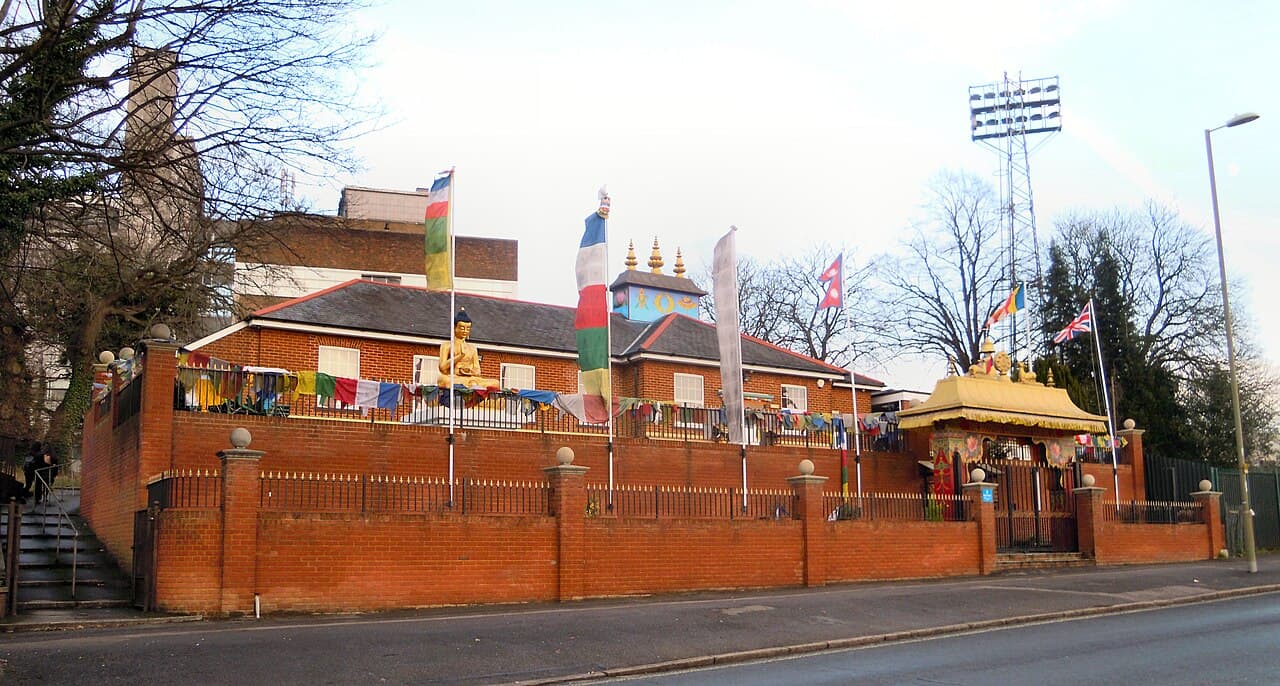
The Buddhist Community Centre UK was founded in 2007 by Kaji Sherpa. It occupies the former Labour Exchange building near the Recreation Ground on the High Street. The 14th Dalai Lama, the centre's patron, formally opened it on 29 June 2015. It includes the Tashi Dongak Choeling monastery and serves as both a temple and a community hub. Check the centre's own pages for visiting arrangements.
Community organisations
- Greater Rushmoor Nepali Community (GRNC) commissioned the Kulbir Thapa statue and has been reported as hosting Nepali New Year celebrations in Aldershot venues.
- Tama Dhee is described by a community blog as a charitable Nepalese association behind the annual Nepali Mela, a festival of the colourful dress, dance and culture of Nepal's ethnic communities (WorldRemit community feature).
We have not verified current contact details for either group, so please look for their official pages.
Festivals worth knowing
Dashain, usually in September or October, is the longest Nepali festival, followed by Tihar, the festival of lights. Nepali New Year falls in mid-April. Local councils elsewhere in Berkshire and Hampshire publish public information about these, such as Bracknell Forest's Dashain and Tihar page. Watch local noticeboards and community social media for events in Aldershot.
Food
Momos (steamed dumplings) and thukpa (noodle soup) are staples of the Nepalese menu (WorldRemit). Restaurants and cafes listed in town include Gurkha Villa on Station Road, Namaste Johney Gurkha on Victoria Road and Om Restaurant on Station Road, though opening hours and menus change, so check before you go. Our directory lists local restaurants.
Reading on
For the wider story, see the history of Aldershot.
Checked 5 October 2026. Details change, so follow the official links above before you travel.
| Measure | Rushmoor | Source table |
|---|---|---|
| Nepali ethnicity (incl. Gurkha) | 10,575 (10.6% of 99,756) | TS022 |
| Nepalese as main language (aged 3+) | 8,571 of 95,966 | TS024 |
| Buddhist | 4,732 (about 4.7%) | TS030 |
| Hindu | 5,708 | TS030 |
Frequently asked questions
- How many Nepali people live in Rushmoor?
- The 2021 Census recorded 10,575 people of Nepali ethnicity (including Gurkha) in Rushmoor, about 10.6% of 99,756 residents (ONS Census 2021, table TS022 via Nomis).
- Why do so many Nepali families live in Aldershot?
- Because of the long Gurkha connection with the British Army. In 2009 the government extended settlement rights to many veteran Gurkhas, and many families settled in Aldershot and Farnborough.
- Who opened the Buddhist Community Centre in Aldershot?
- The 14th Dalai Lama opened it on 29 June 2015. It was founded in 2007 by Kaji Sherpa.
- Who is Kulbir Thapa Magar?
- The first Nepalese Gurkha to receive the Victoria Cross. A bronze statue of him stands in Princes Gardens, unveiled 25 September 2021.
- What is the Nepali ethnicity figure based on?
- It adds two Census categories, 'Asian: Nepali (includes Gurkha)' (8,991) and 'Other ethnic group: Nepali (includes Gurkha)' (1,584).
Share this article